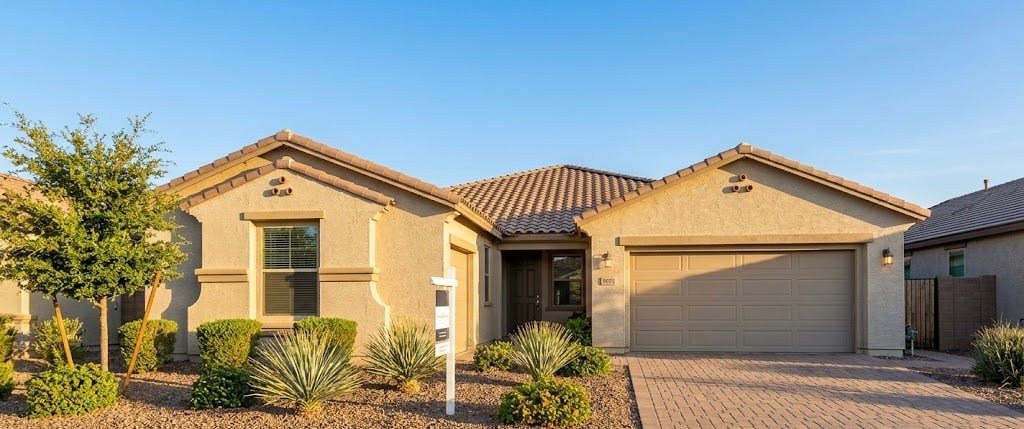
You've watched the "for sale" signs go up and come down on your street. Maybe a neighbor sold fast, or maybe one sat for two months and dropped the price twice. Now you're wondering the real question every West Valley homeowner eventually asks: Is my neighborhood still gaining value — and if I'm thinking about selling, am I reading the situation right?
It's a fair question whether you're in an established Peoria subdivision, a newer Verrado or Vistancia home, or a Surprise community that's still filling in. The honest answer is that no one can promise you what your home will be worth next year. But you don't need a crystal ball. You need to know which signals actually drive value in the West Valley, how to read them for your specific street, and what to verify before you make a move. Let's dive in.
Why "Fastest Appreciating" Lists Don't Help You Sell
You'll find plenty of articles ranking the "hottest" or "fastest appreciating" Arizona zip codes. Here's the problem: those rankings are backward-looking snapshots that change constantly, and they rarely match what's happening on your street. Two homes in the same zip code can tell completely different stories depending on lot size, condition, school boundary, and how built-out the community is.
For a seller, the question isn't "which neighborhood is winning a list." It's "what is my home worth today, why, and is that likely to hold while I sell." That's a question you can actually answer with the right information.
The Value Drivers That Matter Most in the West Valley
Home value isn't random. A handful of factors do most of the heavy lifting, and they're worth understanding before you list.
Local supply and demand
When fewer homes are for sale and buyers are active, sellers have more leverage. When inventory climbs and homes sit longer, buyers gain the upper hand. The clearest local signal is days on market and the number of active listings in your specific community — not the national headline.
New construction competition
This one is unique to fast-growing West Valley areas. If a builder is actively selling new homes a mile from you in places like Prasada-adjacent Surprise, parts of Buckeye, or newer Peoria phases, those builders compete directly with your resale home. Builder incentives — rate buydowns, closing cost credits, free upgrades — can pull buyers away from resale unless your home is priced and presented to compete. If you're selling near active new-build sections, this matters more than almost anything else.
Build-out stage of your community
A master-planned community that's still adding phases behaves differently than one that's fully built out. Early-phase communities have builder inventory pressing on prices; mature, fully built communities often have more stable, scarcity-driven demand. Knowing where your community sits on that curve changes your pricing strategy.
Infrastructure and access
Road and commercial growth shapes desirability over time. The continued buildout along the Loop 303 corridor, retail expansion near major intersections, and access to Loop 101, I-10, Grand Avenue, and US-60 all influence how buyers weigh your location. New shopping, healthcare, and dining nearby tend to support demand.
Schools and boundaries
School assignment is one of the most consistent value influences for family buyers. Boundaries can and do change, so this is something to verify rather than assume — but a desirable, stable school boundary is a real asset when you sell.
Condition, age, and the Arizona-specific stuff
Buyers here price in the things that cost money in the desert: roof age, AC system age and condition, water heater, pool equipment and resurfacing, and irrigation. A 15-year-old AC unit or an aging pool pump becomes a negotiation point. Curb appeal and a move-in-ready presentation still move the needle more than most sellers expect.
How to Read Your Own Neighborhood (Without Guessing)
You can get a grounded read on your situation in an afternoon. Here's a simple way to do it.
- Pull recent sold comps, not just active listings. What's closed in your community in the last 60–90 days tells you far more than what's listed or what a neighbor "hopes" to get.
- Check days on market for your community specifically. Are homes like yours selling in two weeks or sitting for two months?
- Count active competition. How many homes similar to yours are for sale right now in your subdivision and the ones next door?
- Note any active builders nearby. Are new homes selling within a mile or two? What incentives are they offering?
- Look at price reductions. A lot of recent price cuts in your area is a signal worth taking seriously.
- Verify your school boundary and any pending changes with the district directly.
Seller Reality-Check Checklist
Before you decide whether now is your moment, walk through this:
- Do I know what comparable homes have actually sold for in my community in the last 90 days?
- Do I know the current days on market for homes like mine?
- Is there active new construction competing with my home nearby?
- What stage is my master-planned community in — still building, or fully built out?
- What's the age and condition of my roof, AC, water heater, and pool equipment?
- Have I confirmed my current school boundary?
- Do I understand my likely costs to sell (commission, repairs, closing costs, possible concessions)?
- Do I know what I'd net, and where I'm going next?
- Is my timeline driven by life (job, family, equity goals) or just by trying to time the market?
If you can answer most of these, you're in a strong position to make a confident decision instead of an anxious one.
A Quick Local Example
Consider a homeowner in a newer Surprise community who bought a few years ago and is now thinking about moving up to a larger home in North Peoria. They assume their home has gained a lot of value because "everything in Arizona went up."
When they actually look, they find a mixed picture: their home likely has solid equity, but a builder two miles away is still selling new homes with rate buydowns, and three similar resale homes in their subdivision are currently for sale. That doesn't mean it's a bad time to sell — it means their home needs to be priced and prepared to compete with both resale neighbors and builder incentives. Understanding that before listing is the difference between a clean sale and a frustrating price-drop spiral.
What This Means for Your Decision
The smartest sellers aren't trying to perfectly time the top of the market. They're answering three questions: What is my home realistically worth today? What will it cost me to sell and move? Does selling now serve the life I'm building? Get those right and the "is my neighborhood still appreciating" question mostly takes care of itself.
Because prices, inventory, builder incentives, school boundaries, HOA fees, property taxes, and commute realities can all change, you should verify the details for your specific home and neighborhood before making a decision.
Next Step
Curious what's really happening with values in your specific West Valley neighborhood? Stephanie White can put together a straightforward, no-pressure look at your home's current value and what comparable homes are actually selling for nearby — so you can decide on your own timeline with real numbers in front of you. Reach out to schedule a friendly consultation and build a simple, step-by-step plan for your next move.
FAQs
How do I find out what my West Valley home is actually worth right now? The most accurate read comes from recent sold comps in your specific community, adjusted for your home's condition, lot, and upgrades. Online estimates are a starting point, but they don't account for your roof age, pool, or which side of a school boundary you're on. A local agent can pull and interpret the real comps for you.
Is now a good time to sell in the West Valley? That depends far more on your situation than on the market headline. If you have equity, a reason to move, and a plan for where you're going, timing the perfect peak matters less than people think. The key is knowing your real numbers before you decide.
Does new construction nearby hurt my resale value? It creates competition. When builders in areas like Buckeye, Surprise, or newer Peoria phases offer incentives, your resale home needs sharp pricing and strong presentation to compete. It doesn't mean you can't sell well — it means strategy matters more.
What home features add the most value when selling in Arizona? Buyers here pay attention to the expensive-to-replace items: a newer roof and AC, well-maintained pool equipment, functioning irrigation, and updated kitchens and bathrooms. Move-in-ready condition and good curb appeal consistently help.
Will my property taxes or HOA fees change if values go up? They can. Assessed values, HOA dues, and special assessments are set independently and can shift over time, so verify current figures with the Maricopa County Assessor and your HOA rather than assuming.
How long are homes taking to sell in my area? Days on market varies by community, price point, and condition, and it changes throughout the year. The most useful number is the current days on market for homes similar to yours in your specific subdivision — something worth checking before you list.
Should I make repairs or upgrades before selling? Sometimes, but not always. A few targeted fixes often return more than a major remodel. The right move depends on your home's condition relative to what's selling nearby — a walkthrough before listing usually clarifies what's worth doing.
