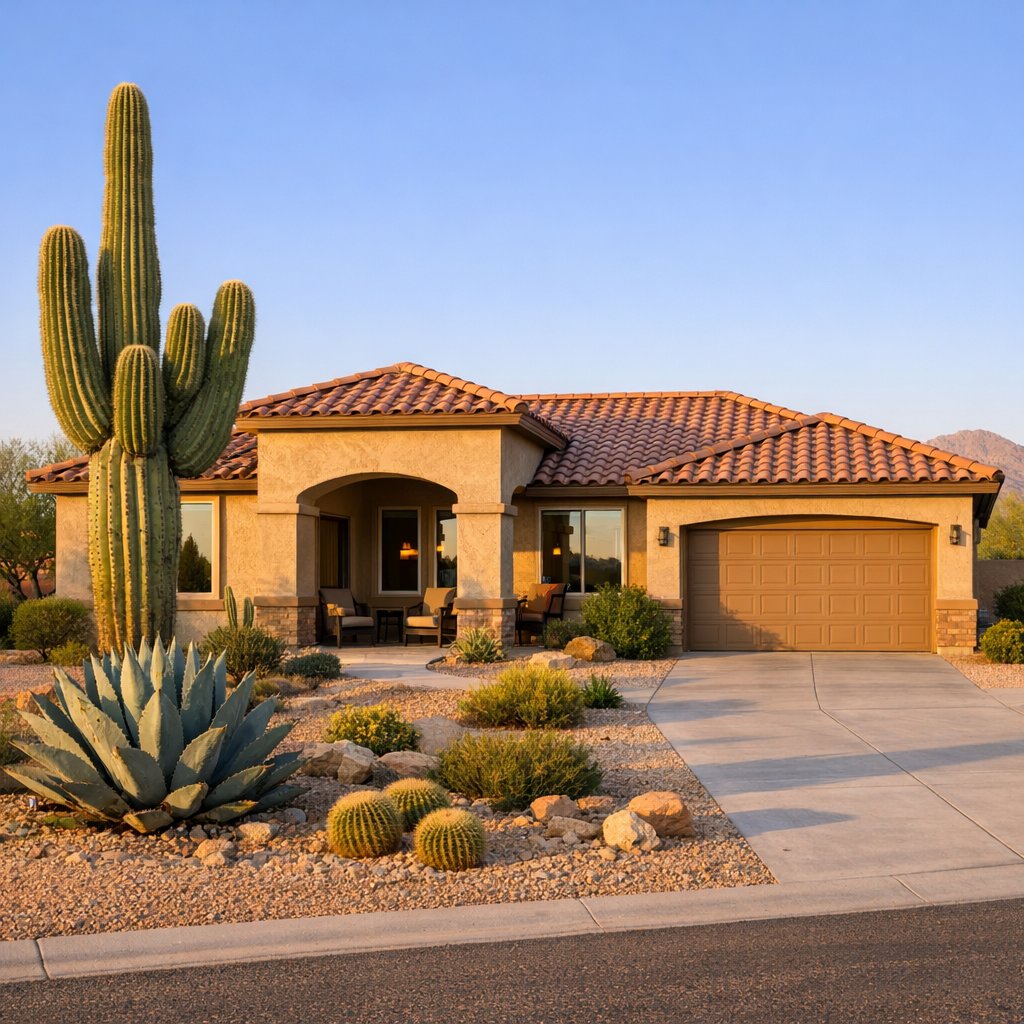
You accepted the offer, the school year is bearing down, and the only realistic window to move your family to Arizona lands squarely in July. Now you're staring at a forecast full of triple digits and wondering what you've signed up for. If you're relocating to the West Valley — Peoria, Surprise, Buckeye, Goodyear, or Glendale — a summer move is completely doable, but it rewards people who plan for the heat instead of pretending it isn't there. This guide walks through what an Arizona summer actually feels like, how to time your move, what your first utility bill might do, how to choose a community that fits your real life, and how to get through moving day without melting. Let's dive in.
What an Arizona summer actually feels like
Between May and September, daytime highs in the West Valley regularly climb past 100 degrees, and the hottest stretches can approach 115 (National Weather Service). The upside most newcomers underestimate: it's a dry heat with very low humidity for much of the summer, so shade, water, and air conditioning genuinely change the experience. The downside newcomers also underestimate: the dryness hides how much you're sweating, so it's easy to get dehydrated without realizing it.
The practical takeaway is that life here reshapes itself around the heat in summer — early mornings and evenings for outdoor time, midday indoors. It's a rhythm, not a hardship, and it's the reason so many homes here are built around pools, covered patios, and desert landscaping that doesn't fight the climate.
Timing your move around the school year
Many families relocate to the West Valley in summer for one simple reason: it lines up with the school calendar. Arizona districts generally start back in late July or early August, so a June or July move gives kids a chance to settle before the first bell. That's a sensible plan — just go in with your eyes open about the tradeoffs.
Summer is the busiest window for movers and HVAC techs, so booking early matters more than it would in the fall. If your timeline is flexible, the shoulder months of October through April are far more comfortable for the physical move itself. If it isn't flexible, that's fine — you just build the plan around the heat, which we'll get to below.
School boundaries can change, and open enrollment options vary — confirm current boundaries and enrollment directly with the district for any home you're serious about, rather than assuming the assigned school from an online listing.
Your first summer utility bill (and how to prepare)
This is the number that surprises people most. Running air conditioning through an Arizona July uses real energy, and your first full summer bill can be dramatically higher than what you paid back home. The West Valley is served primarily by two electric providers — Arizona Public Service (APS) and Salt River Project (SRP) — and which one covers a given home depends on its location, so verify the provider by address before you close.
A few moves that pay off right away:
- Set up power before you arrive. Have electricity active in your name so the AC is running and the house is cool on moving day, not the afternoon after.
- Ask about the AC's age and last service. During your inspection, get the age of the system and when it was last serviced. In summer, HVAC techs are booked solid, so you want to know what you're inheriting.
- Look at plan options. Both providers offer different rate plans; ask the provider which structure fits a household that runs heavy cooling in summer.
- Know that help exists. Arizona's Department of Economic Security (des.az.gov) offers utility-assistance programs for qualifying households.
Because utility costs, rate plans, taxes, and insurance can change, treat any number you hear as a starting point and verify current details with the provider for your specific address.
Choosing a West Valley community for your real life
The West Valley isn't one place — it's a string of distinct communities along a few major corridors, and the right fit depends on your commute, your budget, and the kind of home and lot you want. A quick lay of the land:
Where the West Valley connects
- Loop 303 and Loop 101 tie the northern West Valley together and feed into the wider Phoenix metro.
- I-10 runs through the southern communities toward downtown Phoenix and beyond.
- Grand Avenue (US-60) cuts diagonally across the West Valley and is a useful shortcut once you learn it.
A few community types to compare
- Peoria and North Peoria — established and newer neighborhoods, master-planned options like Vistancia, and easy access to Lake Pleasant.
- Surprise — a wide range of price points, newer construction, and established and age-qualified communities.
- Buckeye and Verrado — one of the fastest-growing areas in the country, with newer builds and master-planned living.
- Goodyear and the Estrella area — newer neighborhoods and amenity-rich master plans on the southwest side.
- Glendale and Litchfield Park — more central West Valley locations with a mix of established homes and mature landscaping.
Rather than deciding from photos, weigh the daily-life factors: how far the commute really is at rush hour, the size of the lot, HOA structure, and whether the home is a new build or resale. HOA fees, rules, and restrictions vary by community and should be reviewed in the current community documents before you commit.
Monsoon season: what a new resident should know
If you arrive in summer, you're arriving during monsoon season, which officially runs June 15 through September 30 (National Weather Service). For the Phoenix area that means a stretch of dramatic afternoon and evening storms — dust, wind, and bursts of heavy rain — even though the total seasonal rainfall averages only about 2.43 inches. Powerful outflow winds can arrive well ahead of the actual rain, sometimes as a wall of dust.
None of this is cause for alarm; it's just worth respecting. Give yourself extra time on the road during storms, don't drive into blowing dust or flooded washes, and know where your home's drainage runs. It's also a good season to notice how a specific property handles water — something worth watching for during a summer showing.
A heat-smart moving-day plan
The move itself is very manageable when you plan around the temperature. Here's a checklist built for an Arizona summer move:
- Book movers and truck rentals early — summer is peak demand.
- Start at sunrise. Do the heavy lifting in the cool early hours and wrap the hardest work before midday.
- Turn on the AC first. Confirm power is active and the house is cooling before the truck arrives.
- Hydrate constantly. Keep a cooler of water and electrolytes on hand for everyone helping.
- Protect heat-sensitive items. Electronics, candles, and anything that can warp or melt should ride in a climate-controlled vehicle, not a hot truck.
- Set up one cool room first. Get a shaded, air-conditioned space ready so kids and pets have somewhere comfortable during the chaos.
- Have window coverings ready. The sun is intense; getting shades up early keeps rooms cooler and protects flooring and furniture.
- Watch the afternoon sky. During monsoon season, a storm can roll in fast — plan to have the truck unloaded before late-day weather.
A quick local example
Picture a family relocating from the Midwest for a new job, closing in early July so the kids can start school in August. They focus their search along the Loop 303 corridor to keep the commute reasonable, and they compare a newer build in Buckeye against a resale home with mature landscaping in Peoria. During inspections they ask the age of each AC system, verify the electric provider by address, and confirm current school boundaries with the district. They schedule the move for a Saturday, start at 6 a.m., have the power on and the house cooling the night before, and finish unloading by early afternoon — ahead of a classic monsoon dust storm that blows through at five. It's a summer move done on purpose, not by accident.
Ready to plan your West Valley move?
Relocating in summer is very doable when you plan for the heat, the utilities, and the monsoon rather than being surprised by them. Ready to compare your options? Schedule a friendly consultation with Stephanie White so you can build a simple, step-by-step plan for your next move.
Frequently asked questions
Is it a bad idea to move to Arizona in the summer?
Not at all — it's just a move that rewards planning. Many families relocate in summer to line up with the school year. You work around the heat by moving early in the day, having the AC on before you arrive, and staying hydrated.
How hot does the West Valley actually get?
Daytime highs regularly pass 100 degrees from May through September and can approach 115 during peak stretches (National Weather Service). It's a dry heat, so shade and air conditioning make a big difference in how it feels.
How high are summer electric bills in the West Valley?
They can be significantly higher than in milder climates because of constant air conditioning. Amounts vary widely by home, provider, and rate plan, so verify current rates with your provider — APS or SRP, depending on the address.
What is monsoon season and when is it?
Monsoon season officially runs June 15 through September 30 (National Weather Service). Expect fast-moving afternoon and evening storms with dust, wind, and heavy rain, even though total seasonal rainfall is modest.
Which West Valley community should I choose?
It depends on your commute, budget, and the type of home and lot you want. Compare communities like Peoria, Surprise, Buckeye, Goodyear, and Glendale on real daily-life factors, and review the HOA documents before committing. Because these details change by property, verify the specifics for any home you're considering.
How do I find the right schools for my kids?
Confirm current school boundaries and open-enrollment options directly with the district, since boundaries can change and online listings aren't always current.
Should I buy a new build or a resale home for a summer move?
Both work well in the West Valley. New builds offer modern efficiency and fresh systems; resale homes often bring mature landscaping and shade that helps with summer heat. The right call depends on timing, budget, and how much move-in readiness you need.
