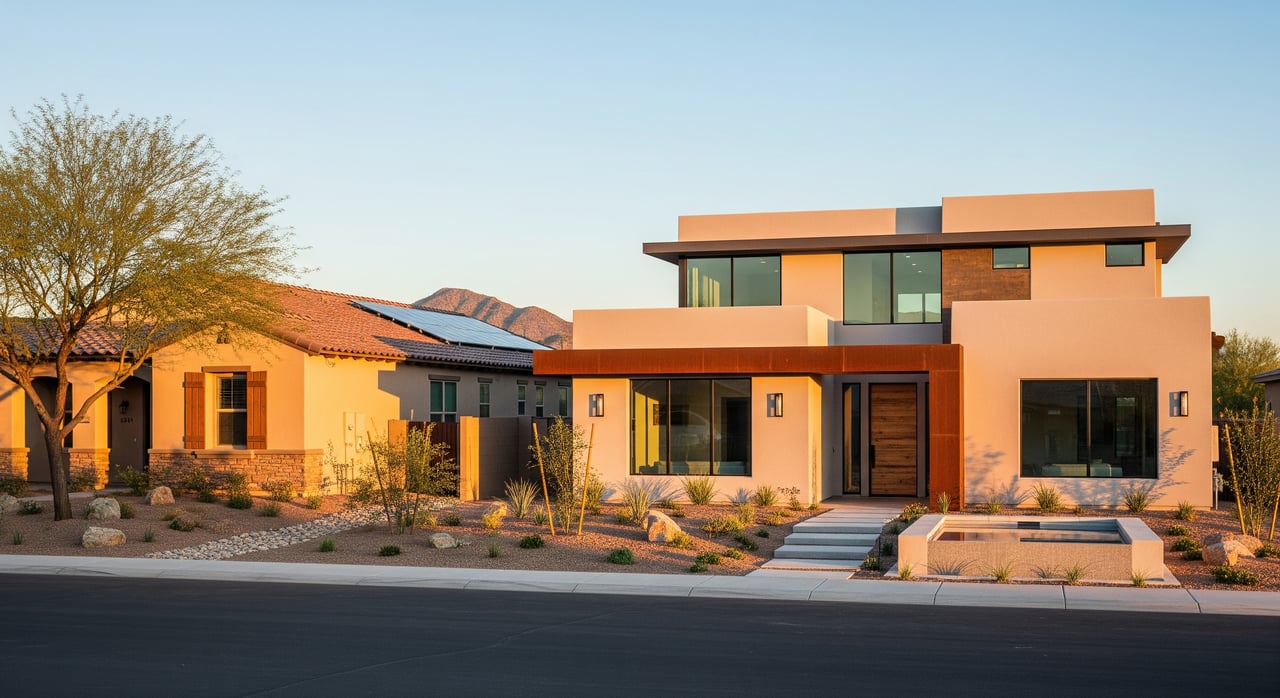
Thinking about a new build or a resale home in Peoria? You are not alone. Many buyers here balance timing, budget, and how much personalization they want. The right choice depends on your move date, your appetite for decisions, and how you feel about upgrades and future maintenance.
This guide walks you through the pros and cons of each path in Peoria. You will learn how timelines, warranties, lot premiums, design center choices, negotiation dynamics, and financing work. You will also get a practical comparison table and a local due-diligence checklist. Let’s dive in.
Peoria market context
Peoria sits in Maricopa County within the Phoenix metro. New construction remains an important supply source, especially in master-planned communities at the city’s edges. Builders must follow the city’s permitting and inspection process, which influences how fast homes are completed. You can review permit and inspection information through the City of Peoria Development Services.
For property tax questions and assessed values, the Maricopa County Assessor offers property records and valuation details. These local resources help you plan your budget and timeline.
New build: pros and cons
Move-in timeline
New build timelines vary. Quick move-in is possible if you choose a completed model or a spec home. A to-be-built home can take 6 to 12 months or more depending on permits, materials, weather, and subcontractor schedules. Builders aim to align your closing with completion, but delays do happen.
Warranties and protections
Most builders provide written warranty packages. Many include short-term workmanship coverage, intermediate coverage for systems, and longer structural protection that can extend up to 10 years through third-party providers. Programs differ by builder, so read the contract and warranty documents closely. You can verify builder licensing and complaint history with the Arizona Registrar of Contractors. For broader context on builder standards and warranties, the National Association of Home Builders and an example provider like 2-10 Home Buyers Warranty offer helpful background.
Customization, lot premiums, and design center costs
Customization is a major advantage. You can select floor plans, finishes, and structural options. Keep in mind that the final price is usually base price plus lot premium plus design center upgrades and closing costs. Premium lots with views, cul-de-sacs, or proximity to amenities often cost more. Ask for itemized upgrade estimates early and clarify change-order policies so you are not surprised later.
Negotiation dynamics
Builders tend to keep base prices firm. Your leverage is often in incentives like closing cost credits, appliance packages, upgrade allowances, or interest rate buydowns. Incentives can be strongest for spec homes, during slower sales periods, or at phase closeouts. Always confirm what is included and whether incentives require the builder’s preferred lender.
Inspections and punch lists
Even with new construction, independent inspections matter. Consider a pre-drywall inspection and a final inspection by a professional experienced in new builds. You will also do a builder walk-through to create a punch list before closing. Confirm in writing how and when punch-list items will be completed after you move in.
Financing and appraisal considerations
Spec and completed homes usually work with standard mortgages. To-be-built homes can introduce rate-lock timing risk if construction runs long. Upgrades may not appraise dollar-for-dollar, which can require extra cash at closing if the appraisal comes in below the contract price. If the builder offers rate buydowns or credits, compare total costs with independent lender quotes before deciding.
HOA, assessments, and community factors
Newer master-planned communities often have homeowner association fees and sometimes initial capital assessments. Review the community plan, amenities, and HOA budget so you understand your monthly and upfront costs.
Energy efficiency and maintenance
New homes follow current building codes. That often means more efficient windows, insulation, HVAC, and appliances, which can reduce near-term maintenance and utility costs. Landscaping is usually younger and may require more initial care.
Resale: pros and cons
Move-in speed
Resale homes often close faster. If the seller is ready and your financing is in order, 30 to 45 days is common. You avoid construction delays, which can be a big plus for relocations on a tight schedule.
Negotiation and repairs
Price negotiation is usually more flexible on resale, especially if a home has been on the market for a while. Inspection findings can lead to concessions or repair credits. You can also negotiate for items like closing timeline or seller-paid closing costs.
Inspections and condition
A full home inspection is essential. Older homes may need specialty inspections, such as roof, HVAC, pest, or sewer scope. Instead of builder warranties, buyers often purchase a third-party home warranty for short-term coverage.
Financing and appraisal
Resale appraisals generally have more comparable sales to support value. That can reduce appraisal surprises. Still, appraisal outcomes influence your final loan terms, so stay aligned with your lender and agent.
Ongoing maintenance
Established neighborhoods may offer mature landscaping and a known maintenance history. Some systems may be nearing replacement, so budget for potential updates to roofs, HVAC, water heaters, or windows.
Side-by-side comparison
| Factor | New Build (Peoria area) | Resale (Peoria area) |
|---|---|---|
| Move-in timeline | Immediate for spec or model; 6–12+ months for to-be-built | Often 30–45 days, faster overall |
| Customization | High through floor plan and finish choices | Low without renovations |
| Price structure | Base price plus lot premium plus upgrades | Negotiable list price with visible comps |
| Negotiation | Incentives more than base price cuts | Price and repair credits more flexible |
| Warranties | Builder and possible third-party structural warranty | No builder warranty; third-party home warranty optional |
| Appraisal risk | Higher for heavy upgrades or new areas | Lower due to more comps |
| Inspections | Important plus punch list | Full inspection, often trade-specific |
| Maintenance | New systems and energy efficiency | Possible near-term capital projects |
| HOA/assessments | Common in newer master-planned areas | Varies by neighborhood |
| Resale appeal | Tied to builder reputation and community growth | Tied to established demand and amenities |
How to choose
Ask yourself a few practical questions:
- Do you need to move within 30 to 45 days or can you wait 6 to 12 months?
- Do you want a home tailored to your style or are you comfortable updating over time?
- Would you rather negotiate incentives and upgrades or focus on price and repair credits?
- How comfortable are you with appraisal variability on a highly upgraded new home?
- Do you prefer the predictability of new systems or the character and maturity of an established neighborhood?
If you are relocating on a firm timeline, resale may be the safer fit. If personalization and new systems top your list, a new build can be worth the wait.
Peoria due-diligence checklist
Use this checklist to protect your time and budget:
- Builder credentials and warranty details:
- Confirm licensing and any complaint history with the Arizona Registrar of Contractors.
- Ask for the builder’s full warranty packet, including workmanship, systems, and structural coverage. Review how to file claims. For general context, explore NAHB warranty resources and example coverage through 2-10 Home Buyers Warranty.
- Permits and inspections:
- Review permit and inspection steps for your specific property with City of Peoria Development Services.
- Pricing clarity:
- Request an itemized estimate that shows base price, lot premium, design center selections, and any required deposits. Confirm change-order rules and late-order pricing.
- Appraisal and comps:
- Ask for recent comparable sales the appraiser might use. Understand the risk that heavy upgrades may not appraise at cost.
- HOA and assessments:
- Read CC&Rs, fee schedules, budgets, and any planned assessments for your community.
- Taxes and valuation:
- Check property details with the Maricopa County Assessor, especially for new construction that may trigger reassessment.
- Inspections and punch lists:
- Hire an independent inspector for new builds at pre-drywall and final stages. For resale, order a full inspection and add trade-specific inspections as needed.
- Financing and incentives:
- If using a builder’s preferred lender to access incentives, compare total costs and rates with at least one independent lender. Use the Bankrate mortgage calculator to explore payments.
- Buyer education tools:
- Review step-by-step buying checklists from the Consumer Financial Protection Bureau and HUD’s buying a home resources.
A simple example
You are moving to Peoria for work and must start in 60 days. A resale home lets you close in about a month and negotiate for repairs. If your start date is flexible and you want a specific floor plan and finishes, a to-be-built new home can deliver exactly that, with the tradeoff of more decisions and a longer timeline. The right choice follows your timeline, budget, and comfort with the process.
Next steps
Whether you choose new construction or resale, a calm, well-managed process makes a big difference. As a local advisor focused on relocation, buyer representation, and new-construction coordination, I help you set the right timeline, compare incentives with total cost, and keep inspections and punch lists on track. If you are weighing new build versus resale in Peoria, let’s talk through your plan and budget.
Schedule your consult with Stephanie White to get a tailored path forward.
FAQs
How long does a new build take in Peoria?
- Spec or model homes can be immediate to a few months, while to-be-built homes commonly run 6 to 12 months or more depending on permits, materials, weather, and contractor schedules.
What do Arizona builder warranties usually cover?
- Many builders offer short-term workmanship coverage, intermediate systems coverage, and longer structural protection, but terms vary by builder, so read the contract and verify licensing at the Arizona Registrar of Contractors.
How do lot premiums and design center choices impact total new-build price?
- Your final price typically equals base price plus any lot premium plus design upgrades and closing costs, so ask for itemized quotes early and confirm change-order rules.
Are appraisals a bigger risk for new construction than resale?
- Appraisals for new builds can be challenging if there are few comparable sales or many upgrades that do not appraise at cost, while resale homes often have more comps and fewer surprises.
Can you negotiate more on a resale home in Peoria?
- Resale sellers often have more flexibility on price and repair credits, especially if the home has been on the market longer, while builders tend to focus negotiation on incentives rather than base price.
