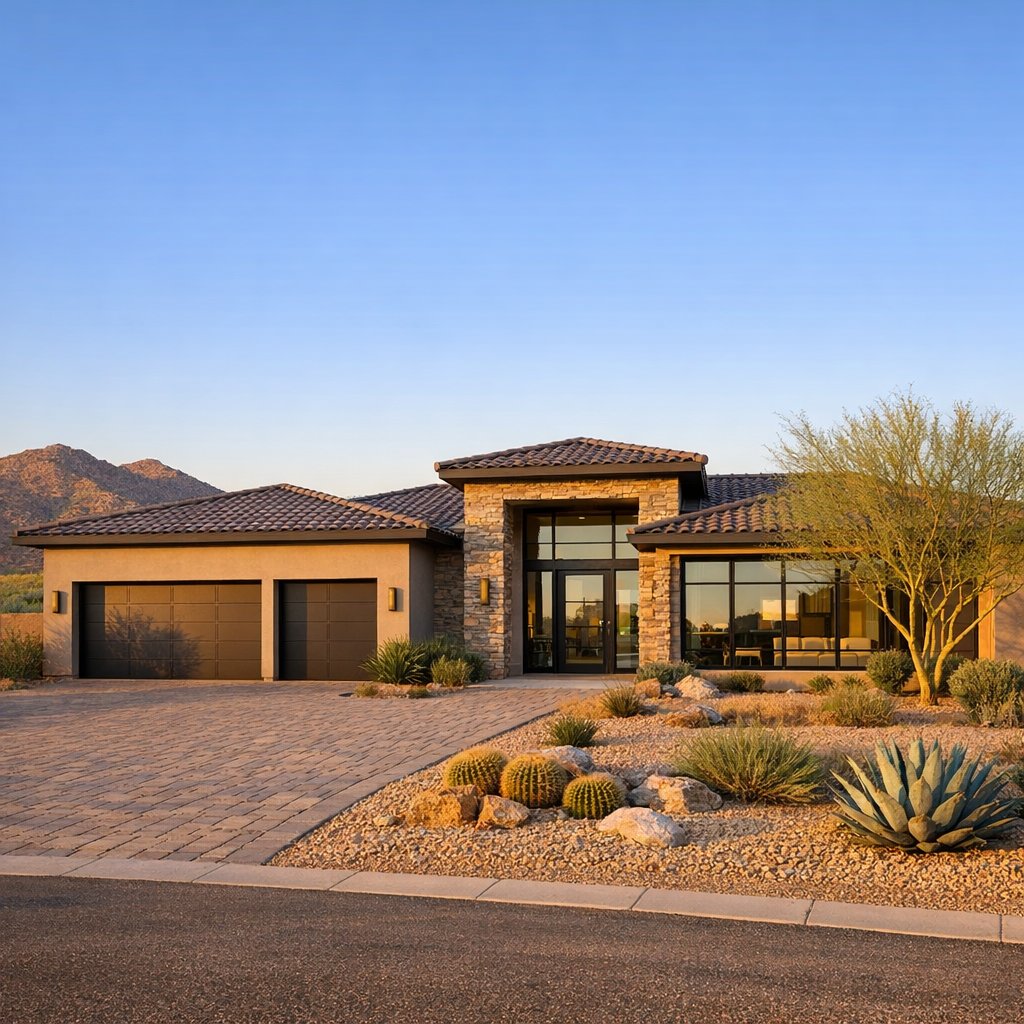
You have built something special in the North Valley — maybe a custom home backing the par-72 course at Blackstone at Vistancia, an estate lot in Verrado, or a view home tucked against the Estrella Mountains in Goodyear. Now you are thinking about selling, and you are starting to sense that moving a $1M-plus home is not the same as selling a typical West Valley resale. You are right. The buyer pool is smaller, the pricing is more nuanced, and the marketing has to work harder. The good news is that none of it is complicated once you understand how the luxury tier actually behaves. Let's dive in.
What "luxury" actually means in the West Valley right now
The first thing worth understanding is that the price point that defines luxury has moved. Across Greater Phoenix, reporting from early 2026 described $1 million as no longer the automatic ceiling it once was, with the typical high-end home in the metro valued closer to $2 million and roughly $1.45 million needed to reach the top tier of listings. (Greater Phoenix market reporting, early 2026. Information deemed reliable but not guaranteed.)
For the West Valley, that matters in a specific way. A $1.2 million home that feels like a true estate in North Peoria or Buckeye may sit in a different competitive position than a home at the same price in Scottsdale or Paradise Valley. Your home is not competing against the whole metro — it is competing against the handful of comparable homes a serious buyer is actually weighing in your corridor. Pricing well starts with knowing exactly which homes those are.
Pricing a luxury home is a different game
In a standard subdivision, pricing is mostly a matter of recent sales of nearly identical floor plans. At the top of the market, that clean comparison often disappears. Custom and semi-custom homes have unique lots, finishes, and square footage, which means there may be only a few true comparable sales — and sometimes none from the last several months.
This creates two practical realities for sellers:
- Appraisal gaps are more common. When a home is unique, an appraiser has less data to work with, and the appraised value can come in below an agreed price. Pricing strategy and strong supporting data help reduce that risk.
- Overpricing is more expensive at this tier. Higher-end listings more frequently see a price reduction before they sell, and a home that lingers can develop a reputation. Homes that are priced correctly from the start still tend to sell in a reasonable window, often near asking.
The goal is not to chase the highest number on day one. It is to enter the market at a price the available evidence can defend, so the home attracts its real buyer instead of educating the market at your expense.
Presentation: the top tier expects turnkey
Luxury buyers in this market tend to prioritize move-in-ready homes — thoughtful finishes, smart-home features, energy efficiency, flexible space for a home office, and genuinely usable outdoor living. The closer your home feels to "nothing left to do," the stronger your position.
That usually means investing in presentation before the first photo is taken:
- Professional media is non-negotiable. High-end photography, cinematic video, and drone footage that shows the lot, the views, and the architecture the way a phone never could.
- Staging that fits the home. The right furnishings let a buyer feel the lifestyle without the rooms looking obviously staged.
- Address the deferred items. At this price, buyers notice an aging roof, a tired pool surface, or dated mechanicals — and they discount harder for them than entry-level buyers do.
Marketing to a smaller, more qualified buyer pool
Because there are fewer buyers for a $1M-plus home, broad "spray and pray" marketing matters less than precise, high-quality exposure to the right people. A strong luxury campaign generally combines a polished single-property presentation, targeted digital placement, and quiet outreach to the agents and networks most likely to be working with qualified buyers.
Privacy and showing management
Many luxury sellers also care about privacy and security. That can mean private, scheduled showings, buyer pre-qualification before access, and thoughtful control over how much interior detail appears publicly. A good listing plan respects how you actually live while the home is on the market.
Timing, seasonality, and days on market
It is normal for higher-end homes to spend more time on the market than median-priced homes — the right buyer is rarer, and the decision is larger. That is not a problem as long as the home is positioned correctly and the expectations are set up front.
Arizona's seasons also play a role. The fall and winter months bring more out-of-state and seasonal buyers into the Valley, while mid-summer tends to be quieter. None of this guarantees a faster or slower sale — every home and street is different — but it is worth factoring into your timing conversation rather than ignoring it.
Choosing the right representation
Selling at this level rewards experience with the specific challenges above: thin comparable data, appraisal management, professional marketing, and discreet buyer handling. When you interview agents, ask how they price unique homes, how they market to qualified buyers, and how they protect your privacy during showings. The answers will tell you a great deal.
Stephanie White is a licensed Arizona REALTOR® with Howe Realty and helps sellers across the North Valley and greater West Valley — including Peoria, North Peoria, Vistancia, Verrado, Estrella, Goodyear, and Surprise — build a clear, strategic plan for higher-end listings.
Your pre-listing checklist for a North Valley luxury home
Before you go live, work through the essentials:
- Comparable analysis: identify the true competing homes in your corridor, not the whole metro.
- Pricing strategy: set an entry price the current evidence can defend, with an appraisal-gap plan.
- Presentation: complete repairs and staging before any media is shot.
- Professional media: photography, video, and drone scheduled for the best light.
- Marketing plan: single-property presentation plus targeted exposure to qualified buyers.
- Showing and privacy plan: decide on pre-qualification, scheduling, and what stays private.
- Timing: align your launch with your goals and the season.
- Disclosures and documents: gather HOA or club documents, warranties, and improvement records early.
A North Valley example
Picture a couple in Blackstone at Vistancia preparing to sell a custom home on a premium lot. There were only a couple of recent comparable sales in the gated section, and both differed meaningfully in finishes and view. Instead of pricing off a neighbor's number from a year ago, they built the price around the current competing homes, invested in professional media and light staging to show the home turnkey, and planned private, pre-qualified showings to protect their privacy. The point of the approach was not a guaranteed outcome — it was entering the market with a defensible price and a presentation that matched the home, so the right buyer could find it. Because prices, inventory, and days on market can change, the specifics should always be verified for your own home and timeline.
The bottom line
Selling a luxury home in the North Valley is less about chasing a headline number and more about strategy: pricing against the right comparables, presenting the home as turnkey, marketing precisely to qualified buyers, and setting realistic expectations on timing. Do those things well and the top tier becomes far less intimidating.
Ready to compare your options? Schedule a friendly consultation with Stephanie White so you can build a simple, step-by-step plan for your next move.
Frequently asked questions
Is selling a $1M-plus home really different from a regular West Valley sale?
Yes. The buyer pool is smaller, comparable sales are thinner, appraisals can be trickier, and marketing has to be more targeted and polished. The fundamentals of a clean, well-priced, well-presented home still apply — there is just less margin for error.
How do you price a luxury home when there are few comparable sales?
You widen and deepen the analysis: look at the closest recent sales, active and pending competing listings, price-per-foot trends adjusted for lot and finishes, and how long similar homes are taking to sell. The aim is an entry price the available evidence can support. Because the market can shift, pricing should be reviewed against current data.
Why do luxury homes sit on the market longer?
There are simply fewer buyers for any given high-end home, and the decision is larger, so it can take longer for the right buyer to appear. A longer typical window is normal at this tier and is not a sign of a problem when the home is priced and marketed correctly.
What is the best time of year to sell a higher-end home in Arizona?
Fall and winter generally bring more out-of-state and seasonal buyers into the Valley, while mid-summer is usually quieter. Timing should fit your goals and your specific home — there is no single right answer, and no season guarantees a particular result.
Do I need to stage and pay for professional media?
At this price point it is strongly advisable. Luxury buyers expect a turnkey feel, and professional photography, video, and drone footage show the home, the lot, and the views in a way that a phone cannot. Staging helps buyers picture the lifestyle the home offers.
How do you protect privacy while selling a luxury home?
Options include private, scheduled showings, buyer pre-qualification before access, and limiting how much interior detail appears publicly. A good listing plan balances exposure with discretion based on how you want to live during the sale.
Which West Valley areas are considered luxury?
Higher-end pockets include Blackstone at Vistancia in Peoria, estate sections of Verrado in Buckeye, view and lakeside homes in Estrella in Goodyear, and custom homes across North Peoria — among others. What qualifies as luxury depends on the specific home, lot, and corridor, so it is best confirmed property by property.
