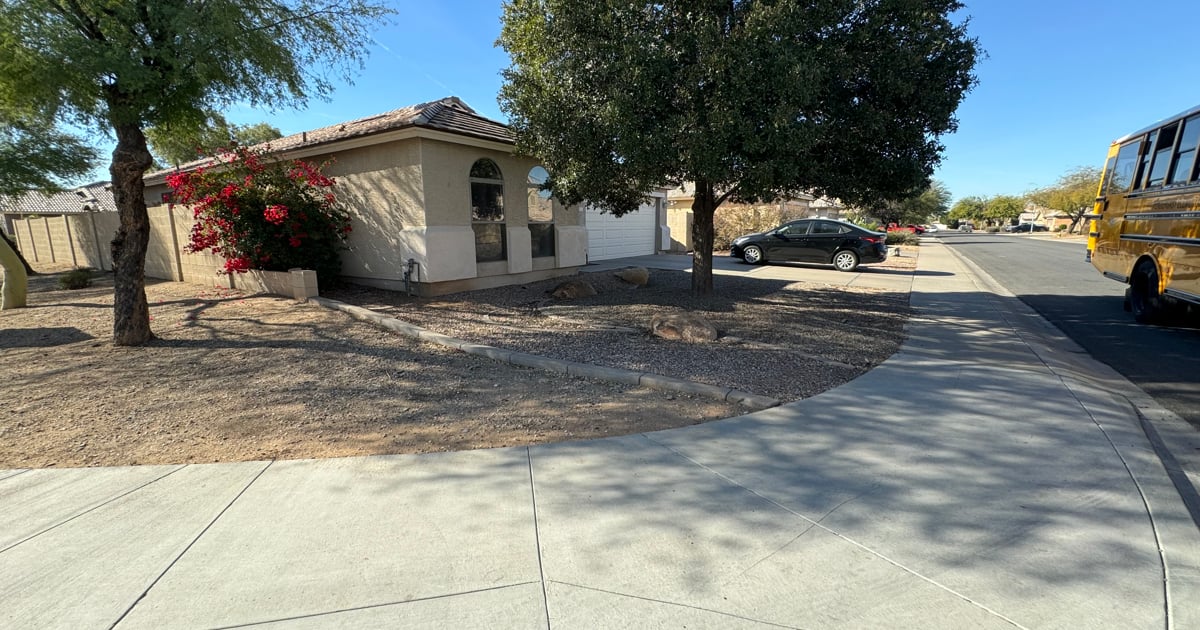
You find a home you like in North Peoria, AZ. Right under the price, the listing says "68 days on market," and off to the side there is a small note: "price reduced." One part of your brain decides something must be wrong with the house. Another part decides the seller is desperate and you can name your number. In the West Valley market of 2026, both of those reactions can walk you straight into a mistake.
A home's listing history is one of the most useful tools a buyer or seller has, and it is also one of the most misread. The days count and the status labels you see come from the Arizona Regional Multiple Listing Service (ARMLS), the same MLS agents across metro Phoenix and the West Valley use every day. Once you understand how ARMLS actually counts those days and what each status word means, the story a listing is telling gets a lot clearer. Here is how to read it before you write an offer.
What "days on market" actually counts
Days on market is not simply how long a house has existed for sale in the world. ARMLS tracks more than one version of it, and the difference matters.
The two you will hear about are ADOM (Active Days on Market) and CDOM (Cumulative Days on Market). CDOM keeps counting while a listing is Active, UCB, or CCBS. A home sitting in Coming Soon does not start accruing CDOM until it actually goes Active.
The wrinkle most buyers miss is the reset. Per ARMLS, if a listing goes off market as Cancelled or Expired for 45 or more consecutive days and is then relisted as a brand-new listing on or after the 46th day, both ADOM and CDOM reset to zero with a new listing number. Briefly parking a home in Coming Soon or Temporarily Off Market does not count toward those 45 days.
Translation: a home showing "9 days on market" might really be a home that has been trying to sell since spring, relisted fresh. And a high CDOM is not automatically a warning sign in a market where longer days on market are common. The number is a starting question, not an answer.
The status line is a story: Active, Coming Soon, UCB, CCBS, Pending
The status word next to the price tells you exactly how much room you have to act. Here is what each one means in ARMLS:
- Active: On the market, being marketed, open to offers. Your window is fully open.
- Coming Soon: In the MLS but not yet available to tour or offer on. ARMLS allows up to 30 days in Coming Soon before a home goes Active, and a seller can flip it to Active sooner. It is a pre-market buzz window, not a home you can write on yet.
- UCB (Under Contract Accepting Backup Offers): The seller accepted an offer but is still marketing the home and inviting backups. You can still submit an offer.
- CCBS (Contract Contingent on Buyer Sale): The accepted offer depends on that buyer selling their own home first, and the seller keeps marketing the property. Still worth a look.
- Pending: An offer is accepted and the home is no longer being marketed. Your window has essentially closed unless the deal falls apart.
The short version: UCB and CCBS mean "spoken for, but not sealed." Pending means "done unless it breaks." If you love a UCB home, there is often nothing stopping you from putting a strong backup in line.
Price cuts: what a reduction really signals
A price reduction is not a confession. In a balanced-to-buyer's West Valley market, plenty of homes launch a little high and then adjust — that is normal recalibration, not distress. What matters is the pattern, not the single note.
One modest reduction after a few weeks usually means the seller is meeting the market. Several cuts spread across a long stretch usually mean one of two things: an ambitious starting price, or a home with a real trade-off in condition, floor plan, or location that buyers keep pricing in. A reduction that lands just under a round number — say, dropping to $599,000 — is frequently a search-filter strategy, not a sign of panic. Read the spacing and the size of the cuts together before you decide what a reduction is telling you.
"Back on market" — the most misread two words in a listing
When a home returns to Active after being UCB or Pending, buyers tend to assume the house must be broken. Usually it is not. A contract most often falls apart over financing or an inspection negotiation, not a hidden flaw. Sometimes it is a buyer's cold feet.
Instead of assuming, have your agent find out why the prior contract cancelled. If it was financing, that has nothing to do with the home. If it was an inspection item, that is something you want to know anyway. A back-on-market home can even be an opportunity: the seller now knows their price is achievable and may be more motivated to make a clean deal happen the second time.
How to pull a home's full history: a buyer's checklist
Before you get attached to a listing, walk through this:
- Ask your agent for the full MLS history, not just the public-portal snapshot. The agent view shows every status change and price change with dates.
- Check CDOM, not just the headline days count, so a relisted home doesn't look fresher than it really is.
- Note every price change and its date, then count the cuts and the spacing between them.
- Look for prior UCB, Pending, or back-on-market events and ask why any earlier contract cancelled.
- Compare it to recent nearby sales in the same community and time frame, not a metro-wide average.
- Confirm the current status before you fall for a home that is already Pending.
Using the history at the offer table without overplaying your hand
A longer days count and a couple of price cuts can support a more measured offer. But the strongest offers are built on comparable sales, not on the days-on-market number alone. A listing that has sat in a firmer micro-market means something different from one that has sat in a softer one, and West Valley cities and communities can move at different speeds in the same month.
Your leverage also depends on why the home is sitting. A great house at an ambitious price rewards a confident, well-supported offer. A home that is sitting because of a condition or location trade-off calls for a different conversation. Because prices, inventory, and conditions can change from neighborhood to neighborhood and month to month, verify current comparable sales for the specific home you are considering. Market direction described here reflects the West Valley as of July 2026; information deemed reliable but not guaranteed.
If you're the seller: what your listing history is telling buyers
Everything above cuts both ways. Every buyer's agent can see your CDOM, your price changes, and any back-on-market events. That is why your launch price and your first two to three weeks carry so much weight — a fresh listing gets the most attention, and a price that has to chase the market leaves a visible trail.
Sellers sometimes ask whether they can withdraw and relist to wipe the slate clean. The clock only resets after 45 or more consecutive days off market, relisted as a new listing, and experienced agents look at CDOM regardless, so the "reset" rarely fools anyone who is paying attention. The far better strategy is to price it correctly the first time and make your strongest push while the listing is new.
A quick West Valley example
Picture a couple upgrading from their first home in Surprise, AZ. They find a larger home in a Peoria, AZ master-planned community listed at 58 days with one $15,000 reduction. The public portal just shows "58 days." The full ARMLS history shows the home briefly went UCB about three weeks in and then came back on market — a financing fall-through, not a condition problem. Knowing that, they write a confident offer a bit under the reduced price, backed by three recent comparable sales, instead of a lowball that would have insulted the seller or a full-price offer that left money on the table. Same listing, very different outcome, all because they read the history first.
Ready to read the story behind the listing?
Ready to compare your options? Schedule a friendly consultation with Stephanie White so you can build a simple, step-by-step plan for your next move — including how to read the full history on any West Valley home before you write an offer.
Frequently Asked Questions
What is a good number of days on market in the West Valley?
There is no universal "good" number. It varies by city, community, price band, and season, and in a balanced-to-buyer's market longer times are common. Compare a home to similar nearby listings rather than a metro-wide average, and verify current local data for the specific area you are considering.
Does a price reduction mean I should lowball?
Not automatically. Base your offer on recent comparable sales and on the reason the home is sitting — price, condition, or timing — rather than on the size of the reduction alone.
Can I make an offer on a home marked UCB or CCBS?
Yes. Both statuses mean the seller is still marketing the home and accepting offers — a backup offer for UCB, or a contingent situation for CCBS. Pending is the status that means the seller has stopped marketing and your window has closed unless the deal falls through.
Why did a home go "back on market"?
Usually a prior contract cancelled, most often for financing or inspection reasons rather than a problem with the house itself. Ask your agent to find out the specifics before you assume anything about the home.
Does relisting a home reset its days on market?
Only if the listing was off market as Cancelled or Expired for at least 45 consecutive days and is relisted as a new listing on or after the 46th day; then ADOM and CDOM reset to zero, per ARMLS. Time in Coming Soon or Temporarily Off Market does not count toward that 45 days.
Where can I see a home's full listing and price history?
Your agent can pull the complete ARMLS history, which shows every status change and price change with dates. Public portals often display only a partial snapshot, which is how relisted homes can look newer than they are.
Stephanie White, REALTOR® | Howe Realty Group, LLC
