On paper, moving from a $650,000 home to a $1.2 million one looks like a bigger mortgage and not much else. Then the first full year of ownership arrives, and the surprises are almost never in the loan payment. They show up in the property tax bill, the insurance renewal, the HOA and club dues, and the cost of cooling and caring for a larger home through a West Valley summer.
If you are a move-up buyer looking at a higher-end home in North Peoria, North Glendale, Surprise, or one of the North Valley's newer master-planned communities, the smartest thing you can do before you write an offer is to price the whole home — not just the list price. This guide walks through the ongoing costs that come with a luxury home here, where they tend to be higher than people expect, and how to build a realistic monthly number so there are no second-year surprises.
Property Taxes: Higher Value Means a Higher Bill, But the Rate Depends on Where You Buy
Arizona property taxes are relatively modest compared with many higher-cost states, which is part of what draws move-up buyers here. But a higher-priced home still means a higher assessed value, and the way that value is taxed is worth understanding before you commit.
In Arizona, a home you own and occupy as your primary residence is a Legal Class 3 property, assessed at 10% of its value for tax purposes (Arizona Department of Revenue, A.R.S. §42-12003, accessed July 2026). The tax you actually pay is that assessed value multiplied by a combined rate set by the overlapping jurisdictions your home sits in — the county, the city, your school districts, and any special districts. Two homes at the same price can carry different tax bills simply because they fall in different cities or school-district boundaries.
One feature that works in owners' favor: under Proposition 117, the Limited Property Value used to calculate your primary tax can rise no more than 5% per year, which keeps the taxable value more predictable than the market price (Arizona Department of Revenue, accessed July 2026). Even so, tax rates and assessments change, so the only number that matters is the actual tax record for the specific property you are considering — pull it before you make an offer.
Community Facilities District (CFD) Assessments on Newer Communities
This is the line item that catches move-up buyers off guard most often in the West Valley. Many of our newer master-planned communities — the kind of places move-up buyers gravitate toward along the Loop 303 corridor and up in North Peoria — were built using a Community Facilities District to finance roads, water lines, and parks.
A CFD is a special taxing district created under Arizona law (Title 48) to fund public infrastructure for a large community. The bonds are repaid over time by the property owners who benefit from that infrastructure, so as the community builds out, the responsibility for that debt shifts from the developer to homeowners (City of Peoria and City of Buckeye CFD resources, accessed July 2026). A CFD levy shows up as a separate line on your tax bill and is limited by statute to no more than $3.00 per $100 of limited property value, with the actual rate varying year to year based on the district's debt service.
The practical takeaway: two nearly identical homes a few streets apart can have meaningfully different total tax bills if one sits inside a CFD and the other does not. Always ask whether a community has a CFD and look for that line on the current tax record.
HOA Dues and Private-Club Fees Can Be Layered
At the higher end of the West Valley market, homeowners association costs are rarely a single flat number. In a large master-planned community like Vistancia in North Peoria, you may pay a master-association assessment plus a village or sub-association fee for your specific neighborhood. Gated and private-club communities can add country-club or social membership dues on top of that, and some memberships are mandatory with the home.
None of that is a red flag on its own — those dues fund the amenities, gates, landscaping, and staffing that make these communities feel the way they do. The issue is only a surprise. Before you fall for a home, get the full picture:
- The dues themselves: master, sub-association, and any club or social membership, and how often each is billed.
- What is mandatory versus optional: some club memberships transfer with the property whether you golf or not.
- Reserves and special assessments: ask whether the association is funding its reserves or has any special assessment on the horizon.
- What the dues actually cover: front-yard landscaping, gates, and amenities in some communities; almost nothing beyond common areas in others.
Insurance Runs Higher on a Larger, Higher-End Home
Homeowners insurance is priced largely on what it would cost to rebuild your home, not on the sale price — and a larger home with custom finishes, a casita, or a pool simply costs more to rebuild. Expect a higher-end home to carry a higher premium than a starter or mid-tier house, and budget for it as a real monthly line, not an afterthought.
A few West Valley-specific things to weigh: homes on the desert edge near the White Tank foothills or backing to open preserve land can draw extra underwriting attention for brush exposure, and a pool or detached structure changes both liability and rebuild cost. Insurance rates and availability shift, so get quotes early — ideally before you are deep into a contract — and verify the number for the actual property rather than assuming.
Utilities, Pool, and Desert Landscaping
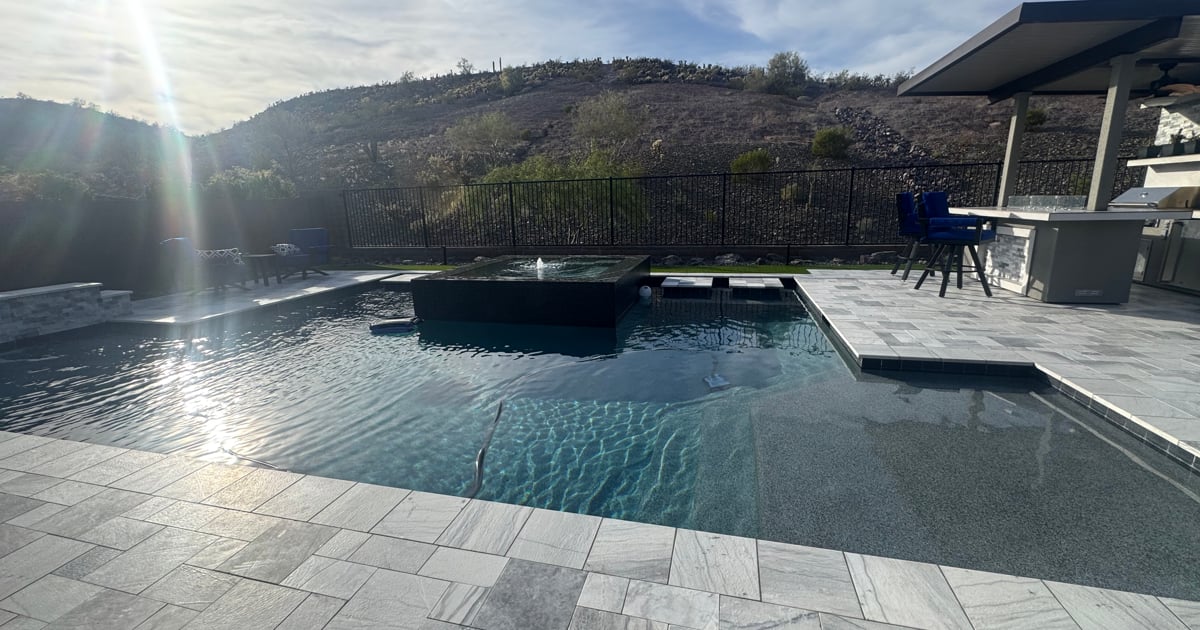
A bigger home costs more to run, and in the West Valley the summer is where that shows up. More square footage means more to cool from May through September, when triple-digit heat is the norm and cooling is the single largest driver of a summer utility bill. Higher-end homes also tend to come with the features that raise ongoing costs: a pool and its pump and service, water features, extensive outdoor living space, and mature desert landscaping that still needs irrigation and seasonal care.
These are lifestyle costs people are usually happy to pay — the pool and the patio are half the reason to buy the home. The point is to count them. A realistic monthly estimate for a luxury home here includes pool service, landscape maintenance, and a summer-weighted utility budget, not just an average pulled from a smaller house.
Maintenance and Reserves: Budget Before Something Breaks
Every home needs upkeep, but a higher-end home has more of it and more expensive versions of it. Tile roofs, multiple HVAC units instead of one, higher-end appliances and systems, smart-home components, and larger water heaters all cost more to service and eventually replace. A common planning rule of thumb is to set aside roughly 1% to 3% of the home's value each year for maintenance and repairs; on a higher-priced home that is a meaningful number, and it is far easier to reserve for it steadily than to be surprised by a failed unit in July.
Treating maintenance as a planned monthly reserve — rather than an occasional emergency — is what keeps a luxury home feeling like a pleasure instead of a pressure.
Your Ownership-Cost Checklist Before You Make an Offer
Run through this list on any higher-end West Valley home before you write an offer, so the monthly number you commit to is the real one:
- Pull the actual property tax record for the specific address — do not estimate from the list price.
- Ask whether the community has a CFD and check the tax bill for that separate line.
- Get every HOA number in writing: master, sub-association, and any mandatory club or social dues, plus billing frequency.
- Request the HOA reserve status and ask about any pending special assessments.
- Get an insurance quote early on the actual home, including pool and any detached structures.
- Estimate summer-weighted utilities based on the home's size, not an average.
- Add pool service and landscape maintenance as their own line items.
- Set a maintenance reserve of roughly 1% to 3% of the home's value per year.
- Add it all up as one monthly number and compare that — not the list price — to your comfort level.
A Quick Local Example
Picture a couple trading a $650,000 home in Fletcher Heights for a $1.2 million home in a gated North Peoria community with a private club. The mortgage jump is the part they planned for. What they had not fully priced was the rest: a higher property tax bill on the higher value, a CFD line because the newer community carries one, a master HOA plus a mandatory club membership, a higher insurance premium for the larger home and its pool, and a bigger summer cooling and pool-service load. None of it made the move wrong — they loved the home and the lifestyle. It simply meant the honest monthly number was several hundred dollars a month higher than the loan payment alone suggested, and knowing that up front let them buy with confidence instead of scrambling in year two.
Frequently Asked Questions
How much should I budget beyond the mortgage for a luxury home in the West Valley?
There is no single figure, because taxes, CFD status, HOA and club dues, insurance, and utilities all vary by community and home. The reliable approach is to price each category for the specific property and add them into one monthly number before you make an offer, rather than working from the list price alone.
What is a CFD and how do I know if a home has one?
A Community Facilities District is a special taxing district used to finance infrastructure in many newer Arizona master-planned communities; the cost appears as a separate line on the property tax bill. Ask the listing agent directly and confirm it on the current tax record — do not assume a community does or does not have one based on how it looks.
Are property taxes high on expensive homes in Arizona?
Arizona's property taxes are generally moderate compared with many higher-cost states, but a higher-value home still carries a higher bill, and the combined rate depends on the city, school districts, and any special districts the home sits in. Because rates and assessments change, verify the actual tax record for the property you are considering.
Why are HOA costs sometimes so layered in North Peoria communities?
Large master-planned communities often have a master association plus a village or sub-association, and gated or private-club communities can add club or social membership dues, some of which are mandatory with the home. Ask for every dues figure in writing and confirm which memberships transfer with the property.
Does a pool really change the cost of ownership that much?
A pool adds regular service, higher summer utility use for the pump, and additional insurance and rebuild considerations. It is a lifestyle feature most West Valley buyers want, but it should be counted as its own monthly line rather than folded into a general estimate.
How do I avoid being surprised by ownership costs after I close?
Use the checklist above before you write the offer: pull the tax record, confirm CFD status, get all HOA and club numbers, quote insurance early, estimate summer utilities, and set a maintenance reserve. Building the full monthly number up front is the single best way to buy without second-year surprises. Because prices, HOA fees, taxes, insurance, and district assessments can change, verify the details for the specific property you are considering. Information deemed reliable but not guaranteed.
Ready to compare your options?
If you are weighing a move up into a higher-end West Valley home, schedule a friendly consultation with Stephanie White, REALTOR® (Howe Realty), so you can build a simple, step-by-step plan — and a realistic monthly picture — for your next move.
